

以前总有人担心,等机器人普及了,快递员是不是就要失业了。刘强东倒是提前想好了一个办法,既然机器人要抢快递员的饭碗,那就让快递员学会修机器人。以后机器人负责送快递,快递员负责给机器人看病。机器人在外面干活,人类在后面负责维修保养。10月18日,京东披露了机器人售后业务的最新进展,已经与智元、云深处、众擎、松延动力等近百家机器人企业达成维修服务合作。未来5年,京东计划建立覆盖全球100多个国家的机器人售后维修网络,同时创造超过10万个机器人维修工程师就业岗位。
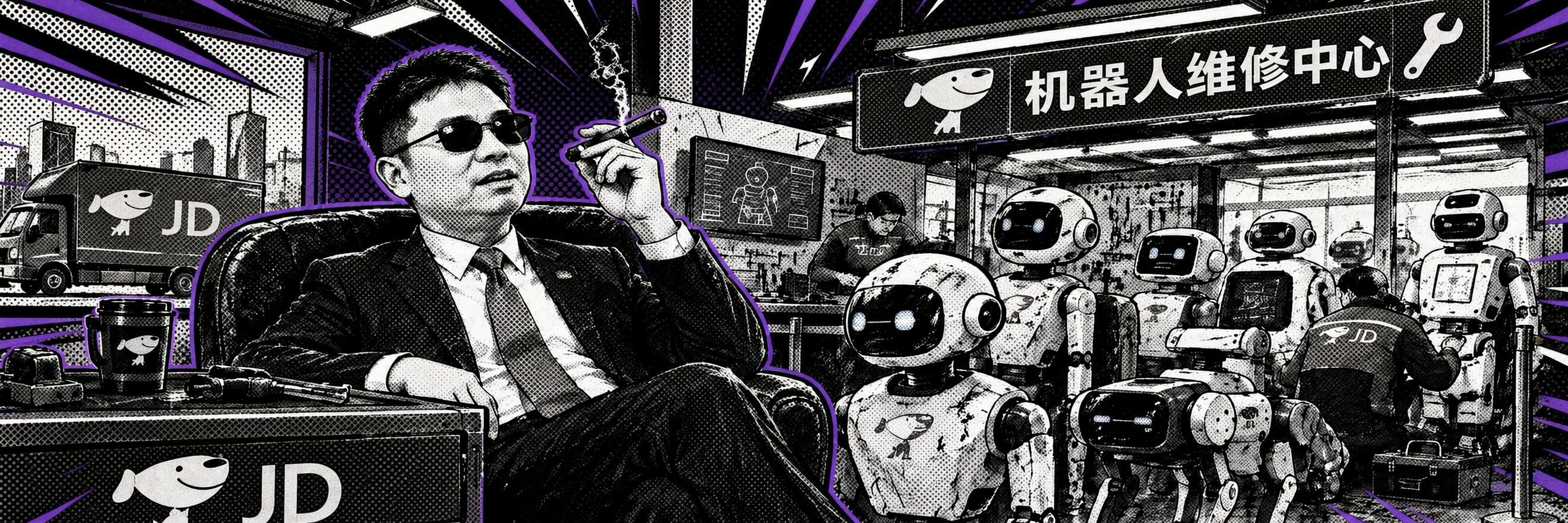
Previously, people worried that once robots became widespread, delivery workers would lose their jobs. Liu Qiangdong thought ahead: since robots will take delivery workers'饭碗, let delivery workers learn to repair robots. In the future, robots deliver packages; delivery workers diagnose robots. Robots work outside; humans maintain and repair behind the scenes. On October 18, JD.com disclosed the latest progress in robot after-sales business—it has reached repair service cooperation with nearly 100 robot enterprises including AgiBot, Deep Robotics, Zhongqing, and Songyan Dynamics. In the next 5 years, JD plans to build a robot after-sales repair network covering over 100 countries globally, while creating over 100,000 robot repair engineer jobs.
刘强东早在今年6月就公开谈过这个问题。在2026年APEC工商领导人中国论坛上,他直言,未来机器人会承担大量快递配送工作,传统快递员岗位可能受到冲击。他有句话说得很直接,将来都是机器人送货了,根本不需要快递员,一定是机器人送货,但是我并不需要我们70万兄弟没有饭吃、没有工作。于是,京东内部提出了一项名为涅槃计划的项目。京东已经在全国签约了120所学校,希望通过技术培训,让快递员等一线员工逐步掌握机器人维修、保养等技能。
Liu Qiangdong publicly discussed this issue as early as June. At the 2026 APEC CEO China Forum, he stated directly that robots will undertake大量 delivery work in the future, and traditional delivery jobs may be impacted. He put it bluntly: "In the future robots will deliver; delivery workers won't be needed; it will definitely be robots delivering—but I don't want our 700,000 brothers to have no food, no jobs." So JD internally proposed a project called "Nirvana Plan." JD has signed contracts with 120 schools nationwide, hoping through technical training to let delivery workers and other frontline employees gradually master robot repair and maintenance skills.
今年8月,京东组织了首批机器人维修工程师转型培训,参与者包括快递员、仓管员、质检员等一线员工。其中,一位41岁的快递员冯本宣,在京东工作了十多年,此前有家电维修经验。经过20多天的培训,他完成了相关考核,准备前往京东昆山维修中心上岗。从每天送快递,到给机器人检查电机、维修零部件,这位快递小哥的职业生涯发生了不小的变化。不过,京东这个计划还有一个很现实的问题,机器人取代快递员之后,真的能创造足够多的维修岗位吗。机器人维修需要一定的技术门槛,机械、电路、传感器、软件系统,哪怕只是基础故障排查,也需要掌握相关知识。对于那些完全没有技术基础、长期从事配送工作的人来说,转型难度显然更大。
In August, JD organized the first robot repair engineer transition training, with participants including delivery workers, warehouse staff, and quality inspectors. Among them, 41-year-old delivery worker Feng Benxuan, who worked at JD for over a decade with prior home appliance repair experience, completed the assessment after over 20 days of training and prepared to work at JD's Kunshan repair center. From delivering packages daily to checking motors and repairing components for robots, this delivery worker's career has changed considerably. However, JD's plan has a very realistic question—after robots replace delivery workers, can enough repair jobs really be created. Robot repair requires certain technical thresholds—mechanical, electrical, sensors, software systems; even basic troubleshooting requires relevant knowledge. For those with no technical foundation who have long worked in delivery, transition difficulty is clearly greater.
其次,机器人替代多少人工,与它能创造多少维修岗位,两者之间未必成正比。一台配送机器人可以承担原来几个人的部分工作,但一名维修工程师,可能同时负责几十台甚至更多机器人的维护。随着机器人技术进步,设备故障率可能下降,AI故障诊断和远程维修技术也会越来越成熟。所以,对于京东提出的未来5年创造10万个就业岗位,值得期待,但还要看实际落地情况。不过,刘强东提前考虑员工转型这件事,本身是有价值的。因为AI时代一个很现实的问题是,企业采用新技术之后,生产效率提高了,成本降低了,但原来的员工怎么办。企业采购机器人可能只需要下一张订单,但对于一个干了十几年快递的员工来说,换一条职业赛道,意味着重新学习,甚至重新适应整个工作环境。
Second, how much labor robots replace and how many repair jobs they create may not be proportional. One delivery robot can take over part of several people's work, but one repair engineer may handle dozens or more robots' maintenance. As robot technology advances, equipment failure rates may decline, and AI fault diagnosis and remote repair technology will mature. So JD's 100,000 jobs in 5 years is worth anticipating but depends on actual implementation. However, Liu Qiangdong considering employee transition ahead of time has value in itself. Because a very realistic AI-era question is: after enterprises adopt new technology, efficiency rises and costs fall—but what about the original employees. Enterprises procuring robots may only need to place an order, but for an employee who has done delivery for over a decade, changing career tracks means relearning and readapting to an entire work environment.
京东看中的机器人售后生意,逻辑也值得单独看。机器人厂商负责造机器人,京东负责给机器人修胳膊、修腿。对于机器人厂商来说,产品研发制造已经需要大量投入,如果每进入一个城市、一个国家,就要自己建设维修中心、招聘工程师、储备维修配件,成本会非常高。特别是很多机器人创业公司,产品可能刚刚卖出几百台、几千台,哪有那么多钱在全国甚至全球建立售后维修网络。这时候,如果有一家企业能够帮助不同品牌提供维修服务,大家就省事多了。去年10月,京东就开始布局机器人售后维修。今年4月,还推出了一个挺有意思的服务,叫机器人救护车。京东还提出了一个120服务标准,1分钟响应、2小时上门、小故障争取当天修复。安装调试、维修保养、零部件供应、设备回收,以及售后管理系统,京东都开始涉足。
The robot after-sales business JD targets has logic worth separate attention. Robot manufacturers make robots; JD repairs their arms and legs. For robot manufacturers, product R&D and manufacturing already require heavy investment; if entering every city and country requires building repair centers, hiring engineers, and stocking spare parts, costs would be very high. Especially for many robot startups that may have just sold hundreds or thousands of units, where would they get the money to build after-sales networks nationwide or globally. At this point, if one enterprise can provide repair services for different brands, everyone saves trouble. In October last year, JD began布局 robot after-sales repair. In April this year, it launched an interesting service called "Robot Ambulance." JD also proposed a "120" service standard—1-minute response, 2-hour on-site, minor faults repaired same day. Installation and debugging, repair and maintenance, parts supply, equipment recycling, and after-sales management systems—JD has entered all of them.
这个模式和前面讨论的FDE逻辑、机器人4S店、宜昌7S店、新疆9S中心是同一个方向的不同表现。前面讨论过具身智能卖的不是机器人,是一个永远调不完的适配,落地的最后一公里靠的是第三方FDE交付团队。也讨论过宜昌7S店把整机销售、配件供应、运维服务等功能集于一店,新疆9S中心在7S基础上叠加科普研学和科创育才。京东做的机器人售后,本质上也是在整机销售之外,把维修、保养、零部件供应、回收这些环节拆出来单独做成一门生意。区别在于,宜昌和新疆是区域性的门店,京东是全国甚至全球性的服务网络。这个生意的关键,和前面讨论的微亿智造微利考验、智元估值500亿但IPO暂缓是同一个问题,机器人保有量能不能起来。如果一个维修中心一年接不到多少订单,光是场地、工程师工资和设备成本,就可能把维修收入吃得干干净净。京东已经开始提前占位置了,但这个位置能不能坐稳,取决于机器人市场本身能不能规模化。
This model follows the same direction as the previously discussed FDE logic, robot 4S stores, Yichang 7S store, and Xinjiang 9S center. Earlier we discussed that embodied intelligence sells not a robot but an adaptation that never finishes tuning; the last mile of deployment relies on third-party FDE delivery teams. We also discussed Yichang 7S store bundling whole-machine sales, parts supply, and operations services into one store, and Xinjiang 9S center adding science education and STEM talent cultivation on top of 7S. JD's robot after-sales business essentially separates repair, maintenance, parts supply, and recycling from whole-machine sales into standalone businesses. The difference is Yichang and Xinjiang are regional stores; JD is a national and even global service network. The key to this business, like the previously discussed Micro Intelligence thin-profit test and AgiBot's 50 billion valuation with IPO postponed, is whether robot installed base can rise. If a repair center receives few orders annually, site, engineer salaries, and equipment costs alone could eat up repair revenue. JD has already positioned early, but whether it can hold this position depends on whether the robot market itself can scale.


