

机器人赛道进入“交付竞争”。最近,启元机器人推出两款个人机器人,主打陪伴、娱乐、AI学习、户外伴行与影像创作等个人生活场景。CEO田华提出要做机器人领域的“苹果”,产品定价恰好与苹果折叠屏iPhone Duo处于同一价格区间。同一天,具身智能赛道在资本端同样密集落子,智身科技宣布完成数亿元B轮融资,机器人累计量产突破1.5万台,单月产能较去年月均提升超10倍;阿里入股墨奇智能,蚂蚁入股天机智能,启元机器人接入腾讯云WorkBuddy。一天之内,从整机到具身大脑、从核心零部件到消费级产品,互联网巨头在具身智能的四个环节同时出手。
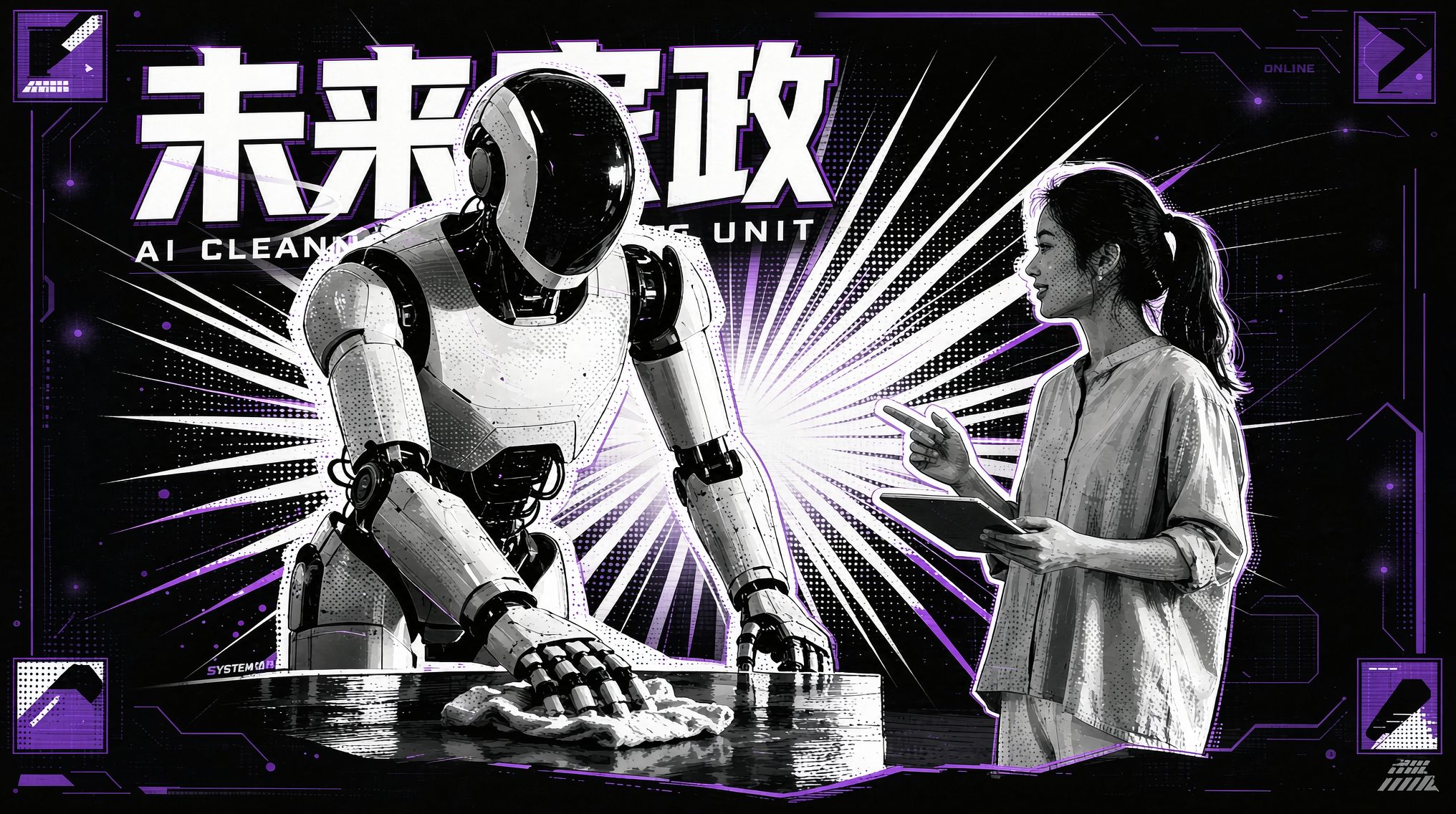
The robot track has entered "delivery competition." Recently, Qiyuan Robotics launched two personal robots targeting personal life scenarios including companionship, entertainment, AI learning, outdoor accompaniment, and imaging creation. CEO Tian Hua proposed becoming the "Apple of robotics," with product pricing恰好 in the same price range as Apple's foldable iPhone Duo. On the same day, the embodied intelligence track saw dense capital moves: Zhishen Technology announced completing a hundreds-of-millions-yuan Series B, with cumulative robot mass production exceeding 15,000 units and single-month capacity up more than 10 times from last year's monthly average; Alibaba invested in Moqi Intelligent, Ant invested in Tianji Intelligent, and Qiyuan Robotics connected to Tencent Cloud WorkBuddy. In one day, from complete machines to embodied brains, from core components to consumer products, internet giants acted simultaneously across four embodied intelligence links.
随着工业和信息化部《关于联合开展2026年度人形机器人与具身智能实景实训专项行动的通知》的正式发布,机器人核心零部件国产化目标被进一步明确,各地方政府加速布局机器人产业集群,从税收优惠、人才引进到产线补贴,为行业发展提供了多维度的制度支撑与资源倾斜。值此节点,艾媒咨询推出了系列机器人产业报告,覆盖投融资监测、行业趋势、执行器、机器人租赁产业及人形机器人五大维度。
With MIIT's "Notice on Jointly Launching the 2026 Humanoid Robot and Embodied Intelligence Real-Scenario Training Special Action" officially released, robot core component localization targets are further clarified, and local governments are accelerating robot industry cluster布局, providing multi-dimensional institutional support and resource倾斜 through tax incentives, talent introduction, and production line subsidies. At this juncture, iiMedia Research launched a series of robot industry reports covering five major dimensions—investment and financing monitoring, industry trends, actuators, robot rental industry, and humanoid robots.
投融资市场监测方面,艾媒咨询发布的《2026年上半年中国具身智能行业投融资市场监测与分析报告》数据显示,具身智能主题融资金额TOP10企业中,前三名分别为月之暗面Kimi(137亿元)、自变量机器人(65亿元)、智平方(60亿元),合计约占TOP10总融资金额的50.55%,头部集中度较高。艾媒咨询分析师认为,资金集中于具备通用大模型底座或核心算法能力的企业,上榜企业多数为AI技术原生公司,其业务既涵盖具身智能决策系统,也延伸至多模态交互与场景应用,呈现技术外溢特征,仅少数企业直接涉及机器人本体制造,说明当前资本更青睐软件与算法层面的高壁垒环节,而非硬件规模化生产。
On investment and financing monitoring, iiMedia Research's "2026 First-Half China Embodied Intelligence Industry Investment and Financing Market Monitoring and Analysis Report" data shows the top three among the top 10 embodied intelligence theme financing amounts are Moonshot AI Kimi (13.7 billion yuan), AgiBot (6.5 billion yuan), and Zhipingfang (6 billion yuan), together accounting for about 50.55% of the top 10 total, with high head concentration. iiMedia analysts believe funds concentrate in enterprises with general large model foundations or core algorithm capabilities; most listed enterprises are AI technology-native companies, whose businesses cover embodied intelligence decision systems and extend to multimodal interaction and scenario applications, showing technology spillover characteristics; only a few directly involve robot body manufacturing, indicating current capital favors high-barrier software and algorithm links over hardware scaled production.
发展趋势方面,具身智能行业正处于从技术验证迈向工程落地的关键转型期。技术端,具身感知、大模型与运动控制技术持续突破,行业核心矛盾已从技术能不能做出来,转向能不能稳定用、能不能规模化、能不能赚钱的工程化稳定性、场景适配性与商业经济性三重考验。市场端,工业制造、仓储物流、高危特种作业等B端专用场景率先落地,人形通用机器人规模化商用仍需跨越技术、成本、标准三重门槛,预计2030年前后迎来产业化奇点。全球产业已形成中美双极差异化发展格局,美国走强脑优先的算法驱动路线,中国走强身筑基的制造牵引路线。
On development trends, the embodied intelligence industry is at a critical transition from technical validation to engineering deployment. On the technology side, embodied perception, large models, and motion control continue breaking through; the industry's core contradiction has shifted from "can technology do it" to the triple test of engineering stability, scenario adaptability, and commercial economics—can it be stably used, scaled, and profitable. On the market side, B-end specialized scenarios including industrial manufacturing, warehousing logistics, and high-risk special operations land first; humanoid general robot scaled commercialization still needs to cross technology, cost, and standards thresholds, with an industrialization singularity expected around 2030. The global industry has formed a China-US bipolar differentiated development pattern—the US takes a "strong brain first" algorithm-driven route; China takes a "strong body foundation" manufacturing-driven route.
执行器领域,机器人执行器作为人形机器人的核心驱动部件,是产业链中价值密度最高的环节之一。艾媒咨询发布的《2025年中国机器人执行器领域市场状况及标杆企业经营数据分析报告》数据显示,执行器板块呈现强者恒强,头部企业在市值、营收和利润端均占据主导,行业集中度持续提升。机器人执行器概念板块营收前三名企业依次为三花智控(240.29亿元)、拓普集团(209.28亿元)、双环传动(64.66亿元)。前三名在TOP10中占比超75%,三花和拓普凭借在汽车热管理、底盘系统等核心领域的深度布局,营收规模遥遥领先。
On actuators, robot actuators, as humanoid robots' core drive components, are among the supply chain links with the highest value density. iiMedia Research's "2025 China Robot Actuator Field Market Status and Benchmark Enterprise Operations Data Analysis Report" data shows the actuator sector presents "the strong get stronger"—leading enterprises dominate in market cap, revenue, and profit, with industry concentration持续 rising. The top three in the robot actuator concept sector by revenue are Sanhua Intelligent Controls (24.029 billion yuan), Tuopu Group (20.928 billion yuan), and Shuanghuan Transmission (6.466 billion yuan). The top three account for over 75% of the top 10; Sanhua and Tuopu lead by far thanks to deep布局 in automotive thermal management and chassis systems.
机器人租赁产业方面,2025年中国机器人租赁产业持续向智能化、服务化升级,依托技术迭代与政策赋能,逐步进入生态融合与规模化发展新阶段。艾媒咨询发布的《2025年中国机器人租赁产业市场状况及标杆企业经营数据分析报告》数据显示,2025年机器人租赁产业资本市场表现呈现高度集中特征,营收前三名企业在TOP10企业中的占比超65%。当前产业仍处于成长期,竞争格局呈现一超多强特征,高估值与研发投入分化并存。
On the robot rental industry, in 2025 China's robot rental industry continued upgrading toward intelligence and service-orientation, relying on technology iteration and policy empowerment to gradually enter a new stage of ecosystem integration and scaled development. iiMedia Research's "2025 China Robot Rental Industry Market Status and Benchmark Enterprise Operations Data Analysis Report" data shows 2025 robot rental industry capital market performance is highly concentrated, with the top three revenue enterprises accounting for over 65% of the top 10. The industry remains in growth stage, with a competitive pattern of "one super, many strong," high valuation and R&D investment divergence coexisting.
人形机器人产业方面,2025年中国人形机器人产业加速从技术研发向示范应用迈进,产业链逐步完善。艾媒咨询发布的《2025年中国人形机器人产业市场状况及标杆企业经营数据分析报告》数据显示,人形机器人产业利润前三名企业依次为汇川技术(44.60亿元)、蓝思科技(31.19亿元)、领益智造(23.77亿元)。前三名利润在TOP10企业中的占比超七成,呈现显著头部效应。产业竞争格局呈金字塔型,技术壁垒与规模效应是盈利关键。
On the humanoid robot industry, in 2025 China's humanoid robot industry accelerated from technology R&D toward demonstration applications, with the supply chain gradually improving. iiMedia Research's "2025 China Humanoid Robot Industry Market Status and Benchmark Enterprise Operations Data Analysis Report" data shows the top three by profit are Inovance Technology (4.46 billion yuan), Lens Technology (3.119 billion yuan), and Lingyi iTech (2.377 billion yuan). The top three account for over 70% of top 10 profits, showing significant head effects. The competitive landscape is pyramid-shaped, with technical barriers and scale effects key to profitability.
这五份报告放在一起看,指向的是同一个判断。前面讨论过工信部上半年人形机器人整机产品超400款、全年产量有望破10万台,也讨论过微亿智造招股时的微利考验、智元估值500亿但IPO暂缓,还讨论过物理AI概念领涨、硅谷和五道口的两种造神运动。这些信息和艾媒这五份报告对得上,机器人产业正在从技术验证走向规模化商用,但这个过程不是齐头并进的。投融资集中在算法和模型层,执行器和人形机器人的利润集中在少数头部企业,租赁市场还在成长期,B端专用场景先落地,通用人形机器人要等到2030年前后。行业进入交付竞争阶段,能不能稳定用、能不能规模化、能不能赚钱,这三个问题会决定接下来谁能留在牌桌上。
Viewed together, these five reports point to the same judgment. Earlier we discussed MIIT's first-half humanoid robot complete machine products exceeding 400 models with full-year output expected to break 100,000 units, Micro Intelligence's thin-profit test at IPO, AgiBot's 50 billion valuation with IPO postponed, and physical AI concept leading gains and Silicon Valley and Wudaokou's two "god-making" movements. These information points align with iiMedia's five reports—the robot industry is moving from technical validation toward scaled commercialization, but this process is not advancing on all fronts simultaneously. Investment and financing concentrate in algorithm and model layers; actuator and humanoid robot profits concentrate in a few leading enterprises; the rental market remains in growth stage; B-end specialized scenarios land first; general humanoid robots wait until around 2030. The industry has entered the delivery competition stage—whether it can be stably used, scaled, and profitable—these three questions will determine who remains at the table.


