

前段时间,波士顿动力公布了专为人形机器人Atlas打造的全新灵巧手,与行业常见拟人五指方案不同的是,这款灵巧手只有四根手指,其中拇指具备4个自由度,其他三根手指各有3个自由度,合计13个自由度,相较上一代的7个自由度近乎翻倍。常见口径中,不包含手腕的情况下,人手的自由度为21个。过去几年不少企业推出了具备高自由度的灵巧手,如月泉仿生开发的Y-Hand M2拥有38个自由度,中科慧思的F系列绳驱仿生灵巧手拥有37个自由度,灵心巧手LinkerHand科研版最高拥有42个自由度,均超越了人手的自由度。
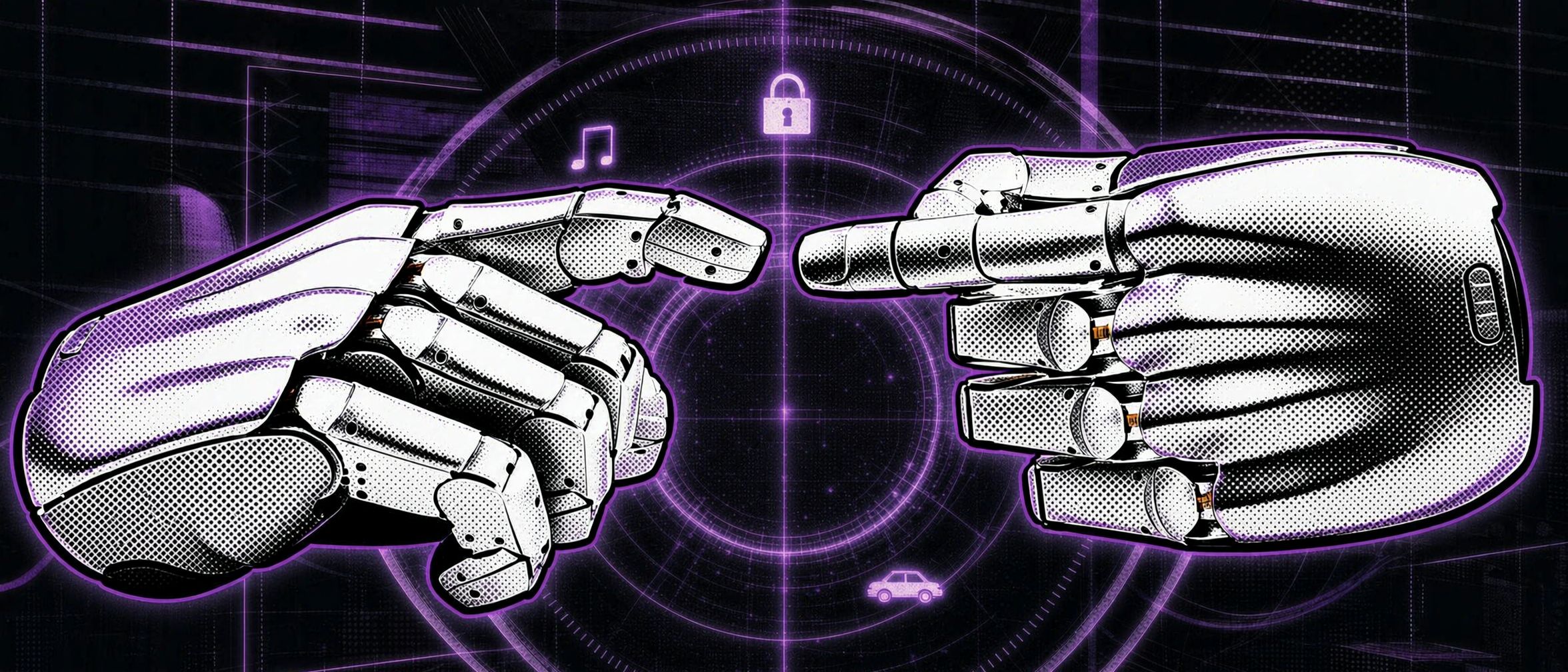
Recently, Boston Dynamics unveiled a new dexterous hand built specifically for its humanoid robot Atlas. Unlike the industry's common anthropomorphic five-finger approach, this hand has only four fingers, with the thumb having 4 degrees of freedom and the other three fingers each having 3, totaling 13 DOF—nearly double the previous generation's 7. Under common convention, excluding the wrist, the human hand has 21 degrees of freedom. Over the past few years many companies launched high-DOF dexterous hands—Yuequan Bionic's Y-Hand M2 with 38 DOF, Zhongke Huisi's F-series cable-driven biomimetic dexterous hand with 37 DOF, and LinkerHand's research edition with up to 42 DOF, all exceeding human hand DOF.
然而近两年企业对于自由度的追求却大幅放缓,不仅波士顿动力砍掉Atlas一根手指,9月份宇树科技发布的灵巧手产品Dex5-S,自由度也仅有22个。全行业主动做减法,或许是整条赛道从参数竞赛转向实用主义的信号。具身智能正处于场景化、规模化落地的关键节点,市场需要的是能干活的机器人产品。超高自由度的灵巧手固然灵活性高,可实际性能未必高于低自由度的灵巧手太多,自由度也存在边际效应。
However, in the past two years companies' pursuit of DOF has slowed considerably—not only did Boston Dynamics cut one of Atlas' fingers, but Unitree's dexterous hand product Dex5-S released in September has only 22 DOF. The entire industry actively subtracting may be a signal that the track is shifting from "parameter competition" to "pragmatism." Embodied intelligence is at a critical node of scenario-based and scaled deployment; the market needs robots that can work. Ultra-high-DOF dexterous hands are certainly flexible, but actual performance may not be much higher than lower-DOF hands—DOF has marginal effects.
曦诺未来资本市场负责人付原诚透露,自由度超过25个后,灵巧手的边际效应会递减,边际成本则会提高。如宇树科技的Dex5-S售价3.99万元起,拥有更高自由度的灵巧手因电机、传感器数量增加,价格将达到十万以上,乃至上百万。中科硅纪CEO张天懿表示,介于二指和五指之间的三指灵巧手,兼顾二指对指能力,还拥有接近五指的通用抓取能力,而且成本相对较低,最受客户认可。除了成本问题,为保障高自由度灵巧手的灵活性,行业主流方案是全电机驱动。宇树科技为Dex5-S足足配备了22个电机,主动自由越高,需要的电机数量就越多,电机工作时的散热、能耗,以及系统集成度,都是摆在企业面前的难题。
Xinuo Future capital market head Fu Yuancheng revealed that after DOF exceeds 25, dexterous hands' marginal effects diminish while marginal costs rise. For example, Unitree's Dex5-S starts at 39,900 yuan; higher-DOF dexterous hands, due to increased motor and sensor counts, cost over 100,000 yuan, even millions. Zhongke Siliji CEO Zhang Tianyi said three-finger dexterous hands between two-finger and five-finger designs balance two-finger opposition capability with general grasping approaching five-finger capability, at relatively lower cost—most recognized by customers. Beyond cost, to ensure high-DOF dexterous hands' flexibility, the industry mainstream solution is all-motor drive. Unitree equipped Dex5-S with 22 motors; higher active DOF requires more motors, and motor heat dissipation, energy consumption, and system integration are all challenges before companies.
最关键的是,现阶段还没有一个足够强大的大脑能够驱动20到30个自由度的灵巧手。曦诺未来付原诚表示,现有的VLA模型在同一个时间戳下,只能输出10个左右运动控制向量,软件能力制约了硬件的上限,许多精密动作需要通过遥控方式实现。说白了,灵巧手领域不再盲目追求自由度,一方面在于成本问题,另一方面在于软件能力不足。自由度越高,灵巧手所需的电机、传感器就越多,再加上产品一致性、可靠性等问题,成本会呈指数级增长。张天懿指出,头部企业的灵巧手产品,在硬件层面的差距已经不算太大。软件能力不足的问题,需要企业投入更多资源训练大模型,而这一切的关键则在于数据。
Most critically, at this stage there is no sufficiently powerful "brain" capable of driving 20 to 30 DOF dexterous hands. Xinuo Future's Fu Yuancheng said existing VLA models can only output about 10 motion control vectors at the same timestamp; software capability constrains hardware upper limits, with many precision actions requiring remote control. Simply put, the dexterous hand field no longer blindly pursues DOF—on one hand due to cost, on the other due to insufficient software capability. Higher DOF requires more motors and sensors, plus product consistency and reliability issues, causing costs to grow exponentially. Zhang Tianyi pointed out that leading companies' dexterous hand products already have relatively small hardware gaps. The software capability shortfall requires companies to invest more resources in training large models, and the key to all this is data.
2026年被具身智能领域称为触觉元年,灵巧手快速普及触觉传感器,可感知物体的软或硬、滑或糙、受力多少,能够完成更多精细化操作。今年8月举办的2026世界机器人大会上,多家灵巧手企业拿下独立展位,不再依附人形机器人展台。基于成本和软件能力考量,7至15个自由度的灵巧手,是现阶段最适合市场的产品。它一头卡在VLA模型当前的控制能力上限附近,另一头又能覆盖绝大多数工业抓取、装配和上下料任务,还具有低成本的优势。至于未来灵巧手的自由度能达到多少,理论上灵巧手可以做到比人手更灵活、上限更高,但灵巧手配置了超出人手范畴的额外自由度,将难以采集高质量训练数据。
2026 is called the "Year of Touch" in embodied intelligence, with dexterous hands rapidly adopting tactile sensors that can perceive objects' hardness or softness, slipperiness or roughness, and force magnitude, enabling more refined operations. At the 2026 World Robot Conference held in August, multiple dexterous hand companies secured independent booths rather than attaching to humanoid robot booths. Based on cost and software capability considerations, dexterous hands with 7 to 15 DOF are the most market-suitable products at this stage. They sit at one end near VLA models' current control capability ceiling, and at the other cover the vast majority of industrial grasping, assembly, and loading/unloading tasks, with low-cost advantages. As for how high dexterous hand DOF can reach in the future, theoretically hands can be more flexible than human hands with higher ceilings, but configuring extra DOF beyond human hand scope will make high-quality training data collection difficult.
当前灵巧手的训练数据主要由仿真合成数据、遥操作真机示教、第一视角Egocentric视频、真机自主Rollout加强化学习四部分组成,其中遥操作真机示教由操作员戴上IMU动捕手套或VR手部追踪设备,将真人手部动作通过运动学重定向映射到灵巧手,是行业最核心的数据。第一视角Egocentric操作视频则是通过摄像头捕捉操作员的手部动作,再用视觉手部姿态估计算法,从视频里解算人手21DOF骨骼,再做人到灵巧手运动重定向,转换成灵巧手可执行的轨迹,这两类数据的直接来源都是人手。人手已经给灵巧手打了样,接近人手的20至25自由度,大概率最终会成为行业的主流选择。作为机器人行业的先驱,宇树科技Dex5-S便选择了1比1人手尺寸,搭配接近人手自由度结构的设计。
Current dexterous hand training data mainly consists of four parts—simulated synthetic data, teleoperated real-machine teaching, first-person Egocentric video, and real-machine autonomous Rollout plus reinforcement learning. Among them, teleoperated real-machine teaching has operators wearing IMU motion capture gloves or VR hand tracking devices, mapping real human hand movements to dexterous hands via kinematic retargeting—the industry's most core data. First-person Egocentric operation video captures operators' hand movements via camera, then uses visual hand pose estimation algorithms to solve human hand 21-DOF skeleton from video, then does human-to-dexterous-hand motion retargeting, converting to dexterous hand-executable trajectories. Both data types' direct source is the human hand. The human hand has already set the template for dexterous hands; approaching human 20–25 DOF will likely become the industry's mainstream choice. As a robotics pioneer, Unitree's Dex5-S chose 1:1 human hand dimensions with a structure approaching human hand DOF.
未来灵巧手的发展,要从短期和长期两个角度分析。短期内,限于成本和软件能力影响,低自由度的三指、四指灵巧手,以及夹爪、吸盘等不灵活的末端执行器仍会是主流。长期来看,追求普适性的人形机器人,未来灵巧手自由度会与人手相仿。最终灵巧手乃至机器人整体自由度的高低,取决于使用场景。当机器人的目标场景是工厂、仓库和结构化环境时,把小指做出来所带来的仿生学美感,抵不过它增加的成本、功耗,以及故障率。也正因如此,面向工业场景的波士顿动力Atlas才敢于砍掉小拇指。即使软件能力达标,不追求全能的工业场景机器人,将来也未必会选择高自由度的灵巧手,很多时候自由度够用就行了。面向家用场景的人形机器人,所执行的任务更加复杂,未来大概率会用上更高自由度的灵巧手。
Future dexterous hand development should be analyzed from short-term and long-term angles. Short-term, limited by cost and software capability, low-DOF three-finger and four-finger dexterous hands, as well as grippers and suction cups and other inflexible end effectors, will remain mainstream. Long-term, humanoid robots pursuing universality will have dexterous hand DOF approaching human hands. Ultimately, dexterous hand and even overall robot DOF levels depend on usage scenarios. When the robot's target scenario is factories, warehouses, and structured environments, the biomimetic beauty of making a pinky finger cannot offset its added cost, power consumption, and failure rate. This is precisely why industrial-scenario Boston Dynamics Atlas dares to cut the pinky. Even with software capability meeting standards, industrial-scenario robots not pursuing omnipotence may not choose high-DOF dexterous hands in the future—often sufficient DOF is enough. Home-scenario humanoid robots perform more complex tasks and will likely use higher-DOF dexterous hands in the future.
接下来几年,灵巧手行业真正的分水岭,绝非谁家又发布了30自由度的新品,关键在于谁能把一只15至25自由度的手,配合VLA大脑,稳定地送进工厂、仓库和家庭等场景。参数表上的数字终会褪色,真正留下来的,永远是那些在对的场景里、把活干完的手。
In the coming years, the dexterous hand industry's true watershed will definitely not be who releases another 30-DOF product. The key lies in who can stably deliver a 15–25 DOF hand, paired with a VLA brain, into factories, warehouses, and homes. Numbers on spec sheets will eventually fade; what truly remains are hands that finish the job in the right scenarios.


