

中国各地出现了一种新的自由职业,机器人训练师,他们穿着动作捕捉设备,把日常家务变成数据,用来教未来的机器干活。这些家务包括拿起杯子、拧开瓶盖、洗碗。数据随后被转换成训练集,帮助机器人在厨房、工厂、超市等场景中工作。这类岗位越来越多地出现在内地社交媒体和招聘平台上,据报道,训练师的月薪在4000元到6000元之间,吸引的是失业工人和寻找灵活工作的年轻人。
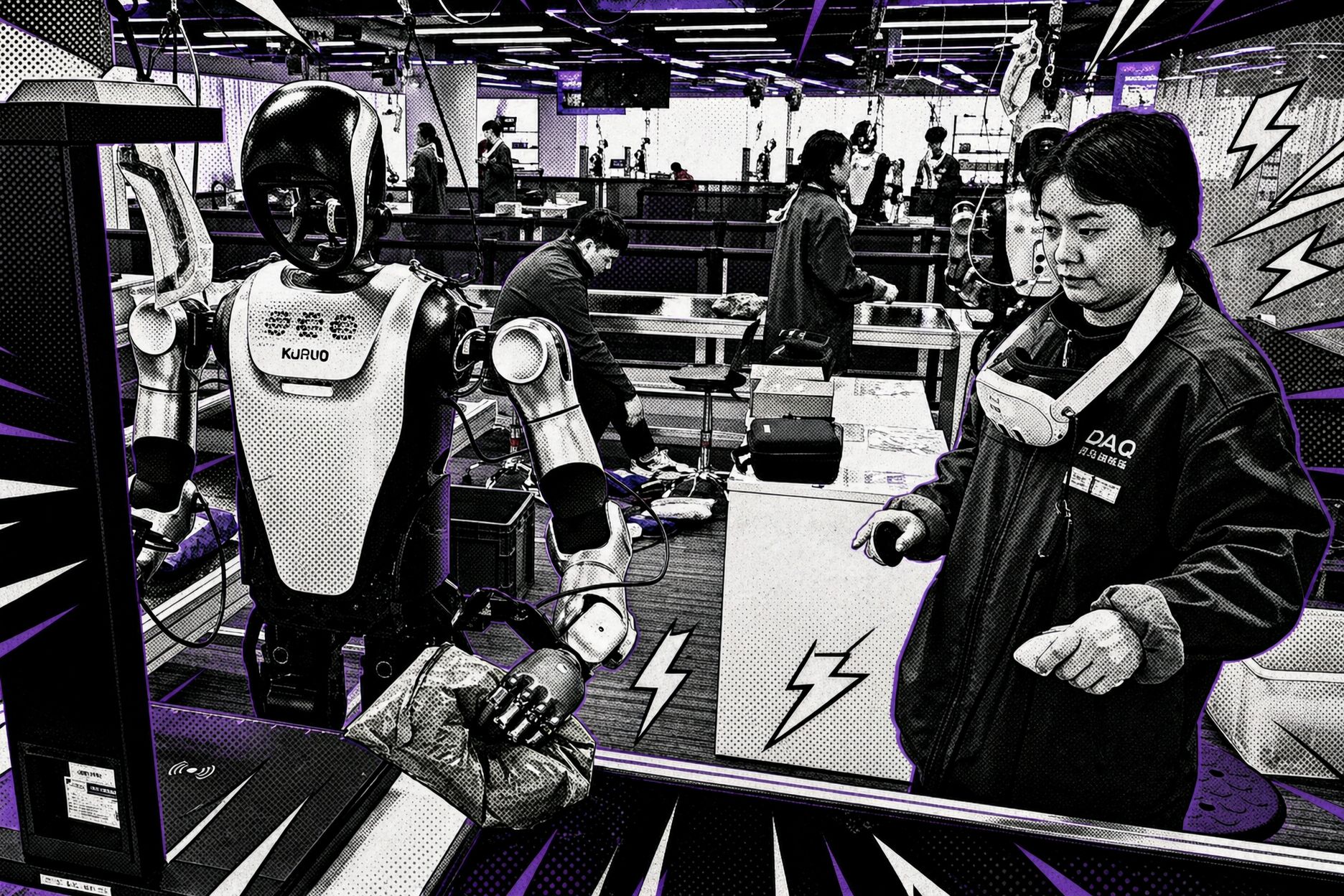
A new breed of freelance "robot trainers" has emerged across China—they wear motion-capture gear to turn everyday household chores into data that will teach tomorrow's machines. These chores include picking up cups, opening bottle caps, and washing dishes. The data is later converted into training sets to help robots work in settings ranging from kitchens and factories to supermarkets. Such roles are increasingly advertised on mainland social media and job platforms. Reportedly, trainers earn between 4,000 and 6,000 yuan a month, attracting unemployed workers and young people seeking flexible jobs.
这篇报道来自《南华早报》,标题里有一句判断值得单独拎出来,有些人认为这件事极具讽刺意味,人类在教机器人干活,而这些机器总有一天会取代它们的训练师。这句话点出了机器人训练师这份工作的一个内在矛盾。训练师的工作是反复演示动作,让机器人学会。机器人学会之后,理论上就不再需要这个训练师演示同一个动作了。但从产业现实看,这个替代关系没有那么直接。前面讨论过机器人数据采集员的实际工作状态,多位受访者提到,机器人要真正像人一样无须调试、适应各种环境,还需要三到五年。在这段时间里,新的场景、新的任务、新的物体类型不断出现,每个新场景都需要重新采集数据。训练师的工作不是一次性的,而是持续跟着机器人的应用场景扩展而扩展。
This report comes from the South China Morning Post. One judgment in the headline deserves separate attention: some view this as deeply ironic—humans are teaching robots to work, yet these machines will one day replace their trainers. This sentence points to an inherent contradiction in the robot trainer job. The trainer's job is repeatedly demonstrating actions so the robot can learn. Once the robot learns, theoretically the trainer is no longer needed to demonstrate the same action. But from an industry reality perspective, this replacement relationship is not so direct. Earlier we discussed the actual working conditions of robot data collectors; multiple interviewees mentioned that for robots to truly operate without debugging and adapt to various environments like humans, another three to five years are needed. During this period, new scenarios, new tasks, and new object types continuously emerge, and each new scenario requires re-collecting data. The trainer's job is not one-time but continuously expands with the robot's application scenarios.
报道里提到的月薪4000到6000元,和前面虎嗅那篇《日薪120元,我给机器人当“老师”》里的数字对得上。白班120元、晚班135元,按每月22个工作日算,月薪在2600到3000元之间。4000到6000元这个区间,对应的是全职或者熟练采集员。这个薪资水平放在中国制造业和服务业的整体薪酬结构里,属于中等偏下,和工厂普工、外卖骑手接近。报道说这类岗位吸引的是失业工人和寻找灵活工作的年轻人,这个描述是准确的。数据采集这份工作的门槛不高,不需要专业技术背景,主要要求是耐心和身体耐受度。它提供的是一份过渡性收入,而不是一份长期职业。
The 4,000–6,000 yuan monthly salary mentioned in the report matches the figures in the earlier Huxiu article "120 Yuan a Day, I'm a 'Teacher' for Robots." Day shift 120 yuan, night shift 135 yuan; calculated at 22 working days per month, monthly salary is between 2,600 and 3,000 yuan. The 4,000–6,000 yuan range corresponds to full-time or skilled collectors. This salary level, placed in China's overall manufacturing and service industry compensation structure, is lower-middle, close to factory general workers and food delivery riders. The report says such positions attract unemployed workers and young people seeking flexible jobs—this description is accurate. Data collection work has a low threshold, requiring no professional technical background, mainly demanding patience and physical endurance. It provides transitional income, not a long-term career.
报道标题里提到的折叠衣服、洗碗200次一天,这个数字值得单独看。200次不是一个小数字,它对应的是机器人数据采集对数量的要求。前面讨论过,高质量数据的标准不只是数量,还要看多样性和覆盖度。同一个动作,要在不同物体、不同角度、不同光照条件下反复采集,才能训练出泛化能力强的模型。200次洗碗,可能对应的是不同大小的碗、不同材质、不同油污程度、不同摆放姿态。对采集员来说,这就是一天8小时重复同一个动作。这份工作的辛苦程度,和前面受访者描述的身体负担是对得上的。
The figure mentioned in the report's headline—folding clothes, washing dishes 200 times a day—deserves separate attention. 200 times is not a small number; it corresponds to the quantity requirements of robot data collection. Earlier we discussed that high-quality data standards are not just about quantity but also diversity and coverage. The same action must be repeatedly collected across different objects, angles, and lighting conditions to train a model with strong generalization. 200 dishwashes might correspond to different bowl sizes, materials, grease levels, and placement postures. For the collector, this means repeating the same action for 8 hours a day. The hardship of this job aligns with the physical burden described by earlier interviewees.


