

在近日于山东泰安举行的小麦智能育种研讨会上,小麦育种具身机器人原型机首次公开亮相。该机器人由山东农业大学教授王宏伟、张亮团队联合研发。机器人采用实时动态差分定位与视觉融合导航技术,可在试验田小区间自主移动作业,搭载滑台高清相机,可对田间小麦进行连续影像采集,并利用视觉算法自动量化株高、穗部性状等表型参数。在此基础上,系统结合智能决策模型,对田间单株进行高通量初筛,自主识别具有进一步考察价值的候选植株。
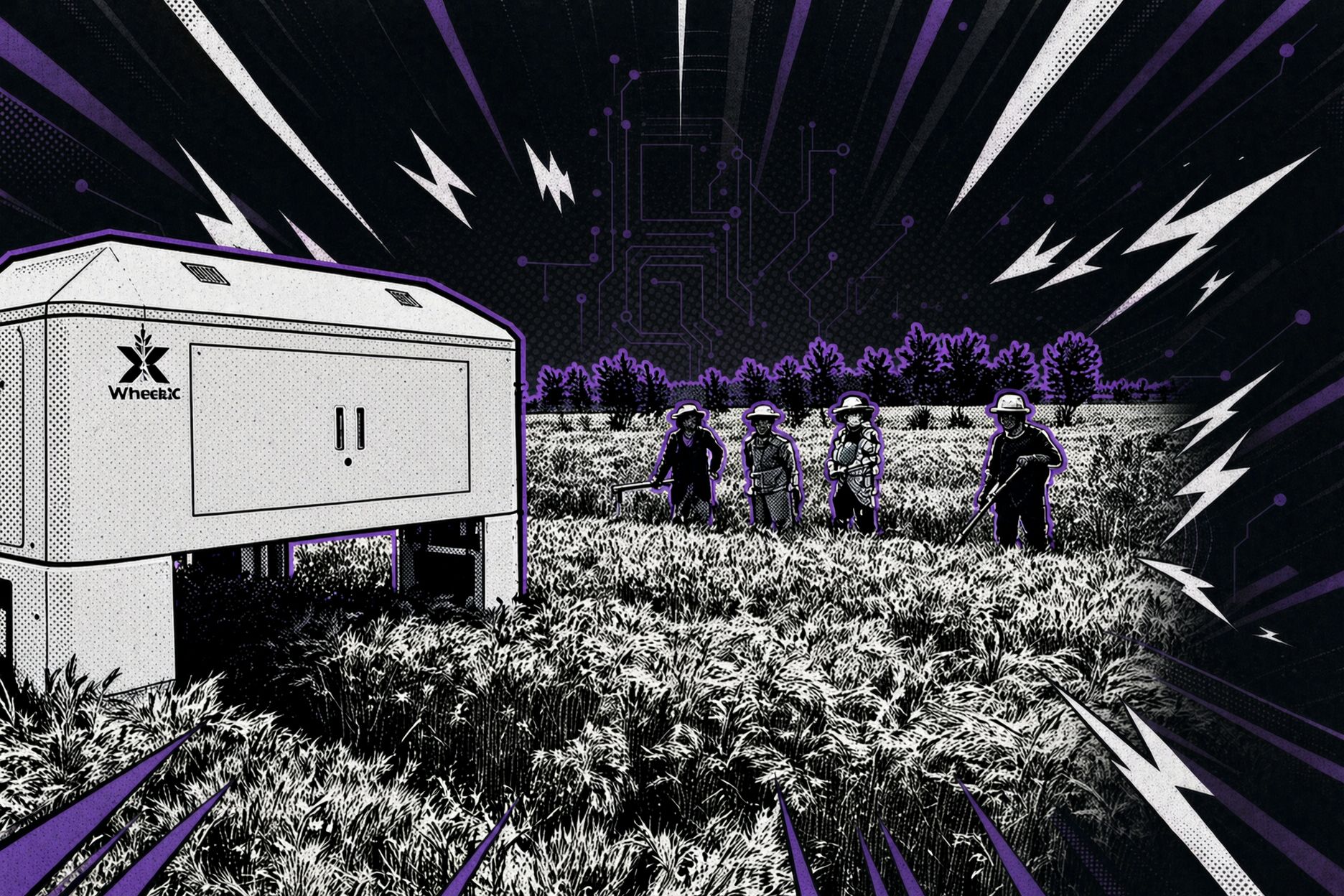
At a wheat intelligent breeding seminar recently held in Tai'an, Shandong, a wheat breeding embodied robot prototype made its first public appearance. The robot was jointly developed by Professor Wang Hongwei and Zhang Liang's team at Shandong Agricultural University. The robot uses real-time kinematic positioning and vision fusion navigation technology, capable of autonomously moving and operating between experimental field plots. Equipped with a sliding high-definition camera, it can continuously collect images of wheat in the field, and use vision algorithms to automatically quantify phenotypic parameters including plant height and spike traits. On this basis, the system combines an intelligent decision model to perform high-throughput preliminary screening of individual plants in the field, autonomously identifying candidate plants with further investigation value.
这件事放在具身智能的落地场景里看,是一个值得单独拎出来的方向。前面讨论过很多具身智能的应用场景,工业制造、仓储物流、电力巡检、家庭服务、太空作业,育种是第一次出现在这个列表里。育种这个场景有几个特点,让它特别适合机器人来做。第一,任务高度重复且标准化。试验田里的小区排列整齐,每株小麦需要采集的表型参数是固定的,株高、穗部性状、生育期,这些指标的定义和测量方法都有明确标准。第二,环境是半结构化的。农田比工厂车间复杂,但比家庭和公共场所简单,路径可以规划,光照和天气的影响可以通过多次采集来补偿。第三,数据价值高。育种的核心是筛选,从成千上万株小麦里找出有进一步考察价值的候选植株,筛选效率直接决定育种周期。人工筛选受限于体力和主观判断,机器人可以高通量、标准化地完成这项工作。
Placed in the context of embodied intelligence deployment scenarios, this is a direction worth isolating. Earlier we discussed many embodied intelligence application scenarios—industrial manufacturing, warehousing logistics, power inspection, home services, space operations. Breeding appears on this list for the first time. Breeding has several characteristics that make it particularly suitable for robots. First, tasks are highly repetitive and standardized. Experimental field plots are neatly arranged, and the phenotypic parameters to be collected per wheat plant are fixed—plant height, spike traits, growth period—with clear standards for definitions and measurement methods. Second, the environment is semi-structured. Farmland is more complex than factory workshops but simpler than homes and public spaces; paths can be planned, and lighting and weather effects can be compensated through multiple collections. Third, data value is high. The core of breeding is selection—finding candidate plants with further investigation value from thousands of wheat plants. Screening efficiency directly determines breeding cycles. Manual screening is limited by physical endurance and subjective judgment; robots can complete this work with high throughput and standardization.
山东农大团队选择的这条技术路线,和前面讨论的农业机器人有相似之处,也有不同。前面讨论过乌干达团队设计的滑轨机器人给感应炉加废钢,那是在重工业场景里用机器人替代人工做危险、重复的工作。山东农大的育种机器人做的是另一类工作,不是物理操作,而是感知和判断。机器人不拔麦子、不脱粒、不称重,它做的是用相机采集影像,用视觉算法量化表型参数,用决策模型筛选候选植株。这个定位让它的技术门槛集中在感知和算法上,而不是执行机构上。实时动态差分定位保证机器人在田间的定位精度,视觉融合导航让它在小区间自主移动,滑台高清相机保证采集的影像质量,视觉算法把影像转成可量化的数据,决策模型把数据转成筛选结论。这条链路的每一环都有成熟技术可以复用,难点在于把它们整合成一个在田间稳定运行的系统。
The technical route chosen by Shandong Agricultural University's team resembles and differs from the agricultural robots discussed earlier. Earlier we discussed the sliding robot designed by a Ugandan team to feed scrap steel into induction furnaces—using robots to replace humans in dangerous, repetitive work in heavy industry. Shandong Agricultural University's breeding robot does a different type of work—not physical manipulation, but perception and judgment. The robot does not pull wheat, thresh, or weigh. It collects images with cameras, quantifies phenotypic parameters with vision algorithms, and screens candidate plants with decision models. This positioning concentrates its technical threshold in perception and algorithms rather than actuators. Real-time kinematic positioning ensures robot positioning accuracy in the field; vision fusion navigation lets it move autonomously between plots; the sliding high-definition camera ensures image quality; vision algorithms convert images into quantifiable data; decision models convert data into screening conclusions. Every link in this chain has mature technology to reuse—the difficulty is integrating them into a system that runs stably in the field.
育种机器人这个方向,放到整个具身智能的产业格局里,代表的是农业这个被长期忽视的场景。前面讨论过很多次具身智能落地难,难在真实场景的稳定性、部署成本和ROI。农业场景的ROI计算和工业不同。工业场景看的是替代多少人工、提升多少效率,农业场景看的是缩短多少育种周期、提高多少筛选准确率。育种周期从几年缩短到几年,这个收益不是用人工成本能直接衡量的。如果育种机器人能把筛选效率提升一个数量级,它对种业的价值是战略级的。山东农大选择从小麦育种这个具体场景切入,而不是做一个通用农业机器人,这个定位和前面讨论的帝尔博格从重工业复杂工序切入、双派机器人从适老化出行切入,是同一个逻辑,先把一个场景做透,再考虑复制。
The breeding robot direction, placed in the overall embodied intelligence industry landscape, represents agriculture—a long-neglected scenario. Earlier we discussed many times that embodied intelligence deployment is difficult, with challenges in real-scenario stability, deployment cost, and ROI. Agriculture's ROI calculation differs from industry. Industrial scenarios look at how much labor is replaced and how much efficiency improved; agricultural scenarios look at how much breeding cycles are shortened and how much screening accuracy improved. Shortening breeding cycles from years to years—this benefit cannot be directly measured by labor cost. If the breeding robot can improve screening efficiency by an order of magnitude, its value to the seed industry is strategic. Shandong Agricultural University chose to enter from the specific scenario of wheat breeding rather than making a general agricultural robot—this positioning follows the same logic as DareRobot entering from complex heavy industry processes and Shuangpai Robotics entering from elderly-oriented mobility: first thoroughly master one scenario, then consider replication.


