

又有一位华为天才少年入局布局家庭机器人赛道。10月12日,家庭具身智能企业欧拉万象完成数亿元天使轮+融资。本轮由诚元祥基金、芯能创投、锡洲国际、拓邦股份、弘毅投资等新老股东联合投资。除老股东超额追投外,拓邦股份等产业资本也成为新晋股东,双方将在业务层面探索进一步合作。值观资本继续担任本轮融资的独家财务顾问。
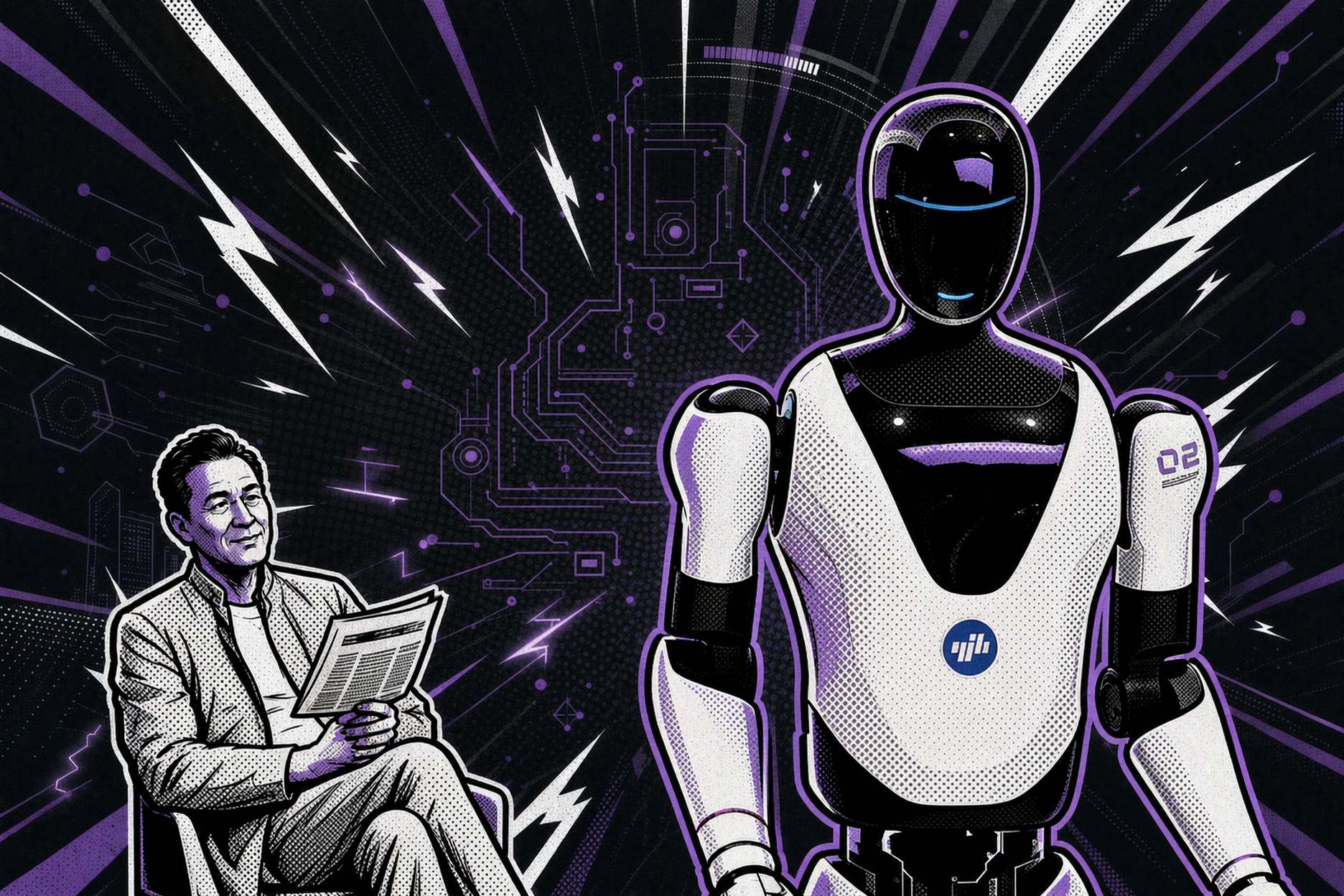
Another Huawei genius youth has entered the home robot track. Jijia Juexing learned that on October 12, home embodied intelligence company Ola Universe completed a hundreds-of-millions-yuan angel+ funding round. This round was jointly invested by new and existing shareholders including Chengyuanxiang Fund, Xinneng Venture Capital, Xizhou International, Topband, and Hony Capital. Beyond existing shareholders' oversubscribed follow-on investment, industrial capital like Topband also became a new shareholder, with the two parties to explore further business cooperation. Zhiguan Capital continues as exclusive financial advisor for this round.
欧拉万象成立于2026年3月,由华为前具身智能首席科学家周顺波博士创立,专注于家庭具身智能,围绕机器人本体、家庭物理Agent、具身智能模型及相关技术基础设施展开研发。欧拉万象成立仅三个月就连续完成3轮融资,投资方包括高瓴创投、五源资本、招商局创投等。再加上刚刚宣布的数亿元天使轮+融资,这家只成立半年多的初创公司,正在快马加鞭布局家庭机器人赛道。与不少聚焦工业制造、仓储物流等场景的具身智能企业不同,欧拉万象选择从普通家庭切入。它的目标不只是造出一台能够执行指令的机器人,而是让机器人能够在真实生活中持续学习,逐渐适应不同家庭的习惯,成为既能帮忙做事、也能互动陪伴的物理智能伙伴。
Ola Universe was founded in March 2026 by Dr. Zhou Shunbo, former Huawei chief scientist of embodied intelligence, focusing on home embodied intelligence, conducting R&D around robot bodies, home physical Agents, embodied intelligence models, and related technical infrastructure. Ola Universe completed 3 consecutive funding rounds just three months after founding, with investors including Hillhouse Ventures, 5Y Capital, and China Merchants Venture. Adding the just-announced hundreds-of-millions-yuan angel+ round, this startup founded only over half a year ago is rapidly advancing in the home robot track. Unlike many embodied intelligence companies focusing on industrial manufacturing, warehousing, and logistics scenarios, Ola Universe chose to enter from ordinary households. Its goal is not just building a robot that can execute commands, but letting robots continuously learn in real life, gradually adapting to different families' habits, becoming a physical intelligence partner that can both help with tasks and provide interactive companionship.
欧拉万象的创始人周顺波博士,曾是华为具身智能领域的核心技术研究人员,也是华为天才少年计划成员。在华为期间,周顺波担任研究科学家,负责华为云物理智能实验室的相关工作,探索云计算能够为机器人产业带来的新价值。团队重点研究具身智能体学习、数据合成等技术,并尝试将相关技术平台用于机器人的通用移动与操作能力开发。这段经历与欧拉万象如今的技术方向形成了直接呼应。机器人要真正进入复杂的现实环境,不能只依赖预先设定的程序,还需要结合模型、数据、训练工具和真实场景中的反馈,不断改善自身能力。
Ola Universe founder Dr. Zhou Shunbo was formerly a core technical researcher in Huawei's embodied intelligence field and a member of Huawei's Genius Youth program. At Huawei, Zhou served as research scientist, responsible for Huawei Cloud Physical Intelligence Lab work, exploring new value cloud computing could bring to the robotics industry. The team focused on embodied agent learning, data synthesis, and other technologies, attempting to apply related technology platforms to general robot mobility and manipulation capability development. This experience directly echoes Ola Universe's current technical direction. For robots to truly enter complex real environments, they cannot rely only on preset programs but must combine models, data, training tools, and real-scenario feedback to continuously improve their capabilities.
在加入华为之前,周顺波曾在香港中文大学机器人研究院及相关研究机构从事联合博士后研究,并带领移动机器人团队,研发面向物流、矿山等应用场景的自主机器人与车辆技术。学术方面,周顺波于2020年获得香港中文大学机械与自动化工程学博士学位,导师为刘云辉教授。他的研究涉及机器人定位、运动控制、三维激光雷达SLAM及自动驾驶车辆等方向。其中,他参与的工业车辆导航控制研究曾获得IEEE Robotics and Automation Letters最佳论文荣誉提名。2026年3月,他创立欧拉万象,将研发重点进一步延伸至家庭物理智能。
Before joining Huawei, Zhou Shunbo conducted joint postdoctoral research at the Chinese University of Hong Kong's Robotics Institute and related research institutions, leading a mobile robot team developing autonomous robot and vehicle technology for logistics, mining, and other application scenarios. Academically, Zhou obtained a Ph.D. in Mechanical and Automation Engineering from CUHK in 2020, under advisor Professor Liu Yunhui. His research covers robot positioning, motion control, 3D lidar SLAM, and autonomous vehicles. His industrial vehicle navigation control research received an IEEE Robotics and Automation Letters Best Paper Honorable Mention. In March 2026, he founded Ola Universe, extending R&D focus further to home physical intelligence.
为什么选择家庭。在工业和物流场景中,机器人的任务通常相对明确,工作环境也可以在一定程度上标准化。但家庭完全不同,物品摆放随时变化,生活习惯因人而异,用户提出的需求往往也没有标准答案。机器人不仅要知道如何完成动作,还得理解当前任务、判断哪些物品需要处理,并在环境变化后继续执行。更进一步,它还需要从人类示范和实际使用反馈中学习新任务。这也是欧拉万象希望解决的问题。按照公司的设想,家庭机器人要真正具备长期使用价值,关键不只是把机器人造出来,而是建立一套让它持续学习、不断改进的技术体系。
Why choose the home. In industrial and logistics scenarios, robot tasks are usually relatively clear, and work environments can be standardized to some extent. But homes are completely different—object placement changes at any time, living habits vary by person, and user requests often have no standard answers. Robots must not only know how to complete movements but understand the current task, judge which objects need handling, and continue executing after environment changes. Further, they need to learn new tasks from human demonstrations and actual usage feedback. This is also what Ola Universe hopes to solve. According to the company's vision, for home robots to truly have long-term use value, the key is not just building the robot, but establishing a technical system that lets it continuously learn and improve.
比如吃完晚饭后,机器人到底能不能把桌面收拾干净,狗狗玩过之后,能不能把散落在客厅的玩具收好,准备出门时,又能不能把玄关的鞋子摆回原位。这些任务看起来简单,真正做起来却没那么容易。机器人需要判断哪些物品应该收走、哪些应该保留,需要在物品位置发生变化后重新规划动作,还要知道拿起东西之后应该放在哪里。如果每一步都要人反复指挥,或者机器人一旦出错就必须由人接手,那么所谓的智能家务,最终还是把负担留给了用户。欧拉万象认为,家庭用户真正需要的,并不是一台动作看起来很流畅的机器人,而是能够把事情交出去、少操心几次的机器人。
For example, after dinner, can the robot actually clean the table? After the dog plays, can it put away toys scattered in the living room? When preparing to go out, can it put entryway shoes back in place? These tasks look simple but are not so easy in practice. The robot needs to judge which items should be removed and which should stay, needs to re-plan actions after object positions change, and needs to know where to put things after picking them up. If every step requires repeated human command, or if the robot must be taken over by a human whenever it errs, then so-called smart housework ultimately leaves the burden with the user. Ola Universe believes what home users truly need is not a robot with smooth-looking movements, but one that can take things off their hands and save them worry.
围绕这一目标,公司近期展示了一系列以家庭为场景的技术探索,涉及移动与操作协同、任务对象选择、动态目标调整,以及从人类示范中学习新任务。在玄关收纳场景中,机器人需要接近鞋子、完成抓取、调整位置,再将鞋子放好;面对客厅里散落的多件玩具,它还需要在放好一件之后重新观察场景,找到剩余目标并规划下一步动作。整个过程中,每一个动作都会影响后续决策。底盘停靠的位置决定机械臂能否顺利够到目标,抓取后的移动方式又影响物品能否稳定放置。
Around this goal, the company recently demonstrated a series of home-scenario technical explorations involving mobility-manipulation coordination, task object selection, dynamic target adjustment, and learning new tasks from human demonstrations. In an entryway storage scenario, the robot needs to approach shoes, complete grasping, adjust position, then place shoes properly; facing multiple toys scattered in the living room, it must re-observe the scene after placing one, find remaining targets and plan the next action. Throughout, each action affects subsequent decisions. Chassis parking position determines whether the robotic arm can smoothly reach the target; post-grasp movement patterns affect whether objects can be placed stably.
欧拉万象在餐桌场景中展示了任务条件下的对象选择能力,机器人结合当前任务判断需要处理的物品,同时保留桌面上的其他物品。这里的关键,是将物体识别与任务理解结合起来。物品是什么,只是判断的起点,在特定场景下是否应该移动它,才直接决定机器人的行动。这也是家庭机器人与传统自动化设备之间的一道重要分界线。传统自动化往往依赖相对明确的任务流程和环境条件,而家庭生活中的物品、空间与使用习惯更加多样。
Ola Universe demonstrated task-conditioned object selection capability in a dining table scenario, with the robot judging items to handle based on the current task while preserving other items on the table. The key here is combining object recognition with task understanding. What an object is, is only the starting point for judgment; whether it should be moved in a specific scenario directly determines the robot's action. This is also an important dividing line between home robots and traditional automation equipment. Traditional automation often relies on relatively clear task flows and environmental conditions, while items, spaces, and usage habits in home life are more diverse.
欧拉万象正在探索的另一条技术路线,是让机器人从人类示范中学习。在此次家庭场景演示中,公司使用了用户与宠物互动相关的第一视角示范数据,展示从人类操作示范到机器人自主执行的技术管线。首先,需要对第一视角画面进行畸变校正,改善场景的几何表达,随后,还要处理人体信息去除、机器人本体映射等问题,解决人类与机器人在外观、视角及动作空间上的差异。经过转换的数据进入模型学习,再由机器人在真实场景中执行和验证。这条技术管线的意义,在于尝试将人类经验转化为机器人能够学习和使用的数据。
Another technical route Ola Universe is exploring is letting robots learn from human demonstrations. In this home scenario demonstration, the company used first-person demonstration data related to user-pet interaction, showing a technical pipeline from human operation demonstration to robot autonomous execution. First, first-person images need distortion correction to improve scene geometric representation; then, human information removal, robot body mapping, and other issues must be handled to resolve differences between humans and robots in appearance, viewpoint, and action space. Converted data enters model learning, then the robot executes and validates in real scenarios. The significance of this technical pipeline is attempting to convert human experience into data robots can learn from and use.
上述能力最终指向欧拉万象从成立之初就在构建的技术底座,Real-World RSI,即真实世界中的递归自我改进。按照公司的技术设想,机器人不应只是一个被动接受训练的对象,还应该逐步参与自身学习过程的设计与改进。举个例子,如果机器人没有把鞋子放进鞋架,问题可能出在空间位置判断,也可能是底盘停靠位置不合适,导致机械臂无法完成预期动作。这两类问题需要的改进方式并不相同。如果是空间判断不准,就可能需要补充不同视角、不同遮挡条件下的物品放置经验,如果是移动与操作配合出现问题,则可能需要更多不同停靠位置下的协同轨迹数据。
These capabilities ultimately point to the technical foundation Ola Universe has been building since founding—Real-World RSI, recursive self-improvement in the real world. According to the company's technical vision, robots should not just be passive training objects but gradually participate in designing and improving their own learning processes. For example, if the robot fails to put shoes on the rack, the problem could be spatial position judgment, or inappropriate chassis parking position preventing the robotic arm from completing the expected action. These two problem types require different improvement approaches. If spatial judgment is inaccurate, experience placing items under different viewpoints and occlusion conditions may need supplementing; if mobility-manipulation coordination has problems, more collaborative trajectory data under different parking positions may be needed.
欧拉万象希望通过一套递归改进机制,将机器人执行过程中暴露的问题转化为具体的学习需求,再据此确定需要补充什么交互经验、如何生成或采集数据,以及怎样验证改进是否有效。除了机器人模型本身,欧拉万象还在构建配套工具链与共创平台,希望让更多非机器人、非AI专业背景的用户参与机器人能力的探索。公司提出了三块技术与产品基石,Ola Unified World Model帮助机器人逐步建立对真实物理世界的理解,Ola Studio让用户能够以更简单的方式参与机器人的训练与养成,Ola World则希望让共创者分享自己教会机器人的任务、经验和灵感。
Ola Universe hopes to use a recursive improvement mechanism to convert problems exposed during robot execution into specific learning needs, then determine what interaction experience to supplement, how to generate or collect data, and how to verify whether improvements are effective. Beyond robot models themselves, Ola Universe is also building supporting toolchains and co-creation platforms, hoping more users without robotics or AI backgrounds can participate in exploring robot capabilities. The company proposed three technology and product foundations: Ola Unified World Model helps robots gradually build understanding of the real physical world, Ola Studio lets users participate in robot training and cultivation more simply, and Ola World hopes to let co-creators share tasks, experiences, and inspirations they have taught robots.
欧拉万象需要直面家庭具身智能真正的竞争焦点,不只是做出的模型能力有多么的强、机器人动作有多流畅,而是能否建立起从真实任务、数据积累、模型训练到效果验证的完整体系,并将这种能力转化为用户可以持续感知的体验改善。周顺波在移动机器人、车辆控制和华为云具身智能领域所积累的丰富研究经历,再到欧拉万象如今探索家庭物理智能,这条技术路线有着非常清晰的延续性。但是也要理性看待,这些科研积累的经验是否能转化为产品竞争力,仍然需要真实场景和商业化结果来回答。
Ola Universe must face the true competitive focus of home embodied intelligence—not just how strong the model capabilities are or how smooth robot movements are, but whether it can establish a complete system from real tasks, data accumulation, model training to effect validation, and convert this capability into experience improvements users can continuously perceive. Zhou Shunbo's rich research experience in mobile robots, vehicle control, and Huawei Cloud embodied intelligence, extending to Ola Universe's current exploration of home physical intelligence, shows very clear continuity in this technical route. But it must also be viewed rationally—whether these research accumulations can convert into product competitiveness still needs real scenarios and commercialization results to answer.


