

为“人造太阳”锻造强大“中国心”,给大国重器装上自主可控的“中国关节”,空天地协同的无人化荒漠种植机器人……这些上海高校的硬核科技成果,近期集中亮相第二十六届中国国际工业博览会。10月12日至16日,工博会在国家会展中心(上海)举办。今年全国共有63所高校遴选527个优质项目参展。其中,上海高校参展项目聚焦国家战略需求与产业痛点,覆盖高端装备制造、新一代信息技术、新材料、绿色低碳、人工智能等重点新兴产业领域,全方位为新质生产力发展赋能。
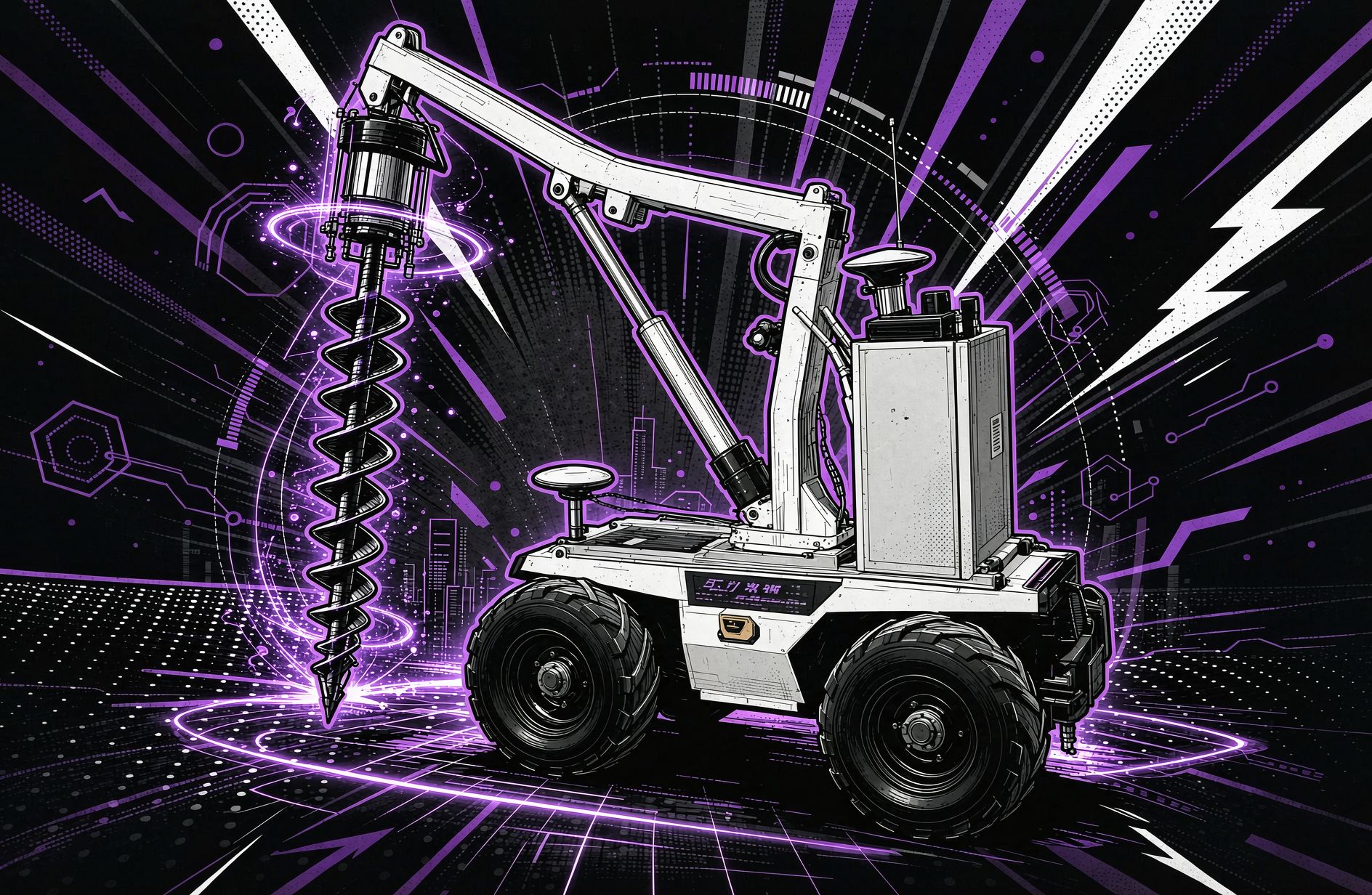
Forging a powerful "Chinese heart" for the "artificial sun," installing independently controllable "Chinese joints" on major national equipment, and an air-space-ground collaborative unmanned desert planting robot... These hardcore scientific and technological achievements from Shanghai universities recently appeared collectively at the 26th China International Industry Fair. From October 12 to 16, the Industry Fair was held at the National Exhibition and Convention Center (Shanghai). This year, 63 universities nationwide selected 527 quality projects to exhibit. Among them, Shanghai university exhibits focus on national strategic needs and industrial pain points, covering key emerging industry fields including high-end equipment manufacturing, next-generation information technology, new materials, green low-carbon, and artificial intelligence, comprehensively empowering new quality productive forces development.
可控核聚变被誉为“人类终极能源”,是当前大国科技竞争的战略核心领域。稳定可控强磁场约束等离子体,始终是制约聚变发展的核心“卡脖子”难题,决定着聚变装置能否实现小型化、商业化。面对这一世界级挑战,上海交通大学电气工程学院金之俭教授团队历经十余年攻关,在大口径高温超导强场磁体领域实现多项国际独创性突破。这个方向的进展,和前面讨论的核聚变研究脉络有交集。前面提到过GPT-6 Astra用20分钟找到Grad猜想的两族精确解,为仿星器路线提供了严格成立的数学基础。金之俭团队做的是另一条路——用高温超导材料造强场磁体,让托卡马克装置能在更小的体积里约束等离子体。一个是数学证明,一个是材料工程,两条路都在推动可控核聚变往前走。
Controllable nuclear fusion is hailed as "humanity's ultimate energy" and is a current strategic core area of great power technological competition. Stably and controllably confining plasma with strong magnetic fields has always been a core "bottleneck" problem restricting fusion development, determining whether fusion devices can achieve miniaturization and commercialization. Facing this world-class challenge, Professor Jin Zhijian's team at Shanghai Jiao Tong University's School of Electrical Engineering, after more than a decade of research, has achieved multiple internationally original breakthroughs in large-bore high-temperature superconducting strong-field magnets. Progress in this direction intersects with the nuclear fusion research thread discussed earlier. Earlier we mentioned GPT-6 Astra using 20 minutes to find two families of exact solutions to Grad's conjecture, providing a rigorously valid mathematical foundation for the stellarator route. Jin Zhijian's team takes another path—using high-temperature superconducting materials to build strong-field magnets, letting tokamak devices confine plasma in smaller volumes. One is mathematical proof, the other materials engineering—both paths are pushing controllable nuclear fusion forward.
工博会的高校展区,呈现的是另一条技术脉络。前面讨论的具身智能、人形机器人、训练场、数据采集,都是产业界在推动的方向,节奏快、资本密集、商业化压力大。高校展区的项目,很多还在实验室阶段,或者刚刚完成原理验证,离量产和商业化还有距离。但这些项目做的是更底层的突破,比如高温超导磁体、无人化荒漠种植、智能调香。这些技术如果成功,影响的不是一两个产品,而是一整条产业链或者一整个应用场景。
The university exhibition area at the Industry Fair presents another technology thread. The embodied intelligence, humanoid robots, training grounds, and data collection discussed earlier are all directions pushed by industry, with fast pace, capital intensity, and high commercialization pressure. Many projects in the university exhibition area are still at the laboratory stage, or have just completed proof of concept, with distance to mass production and commercialization. But these projects pursue more foundational breakthroughs, such as high-temperature superconducting magnets, unmanned desert planting, and intelligent fragrance blending. If these technologies succeed, they affect not one or two products, but an entire industry chain or an entire application scenario.
63所高校、527个项目,这个规模说明工博会已经不只是企业展示产品和拿订单的地方,也成了高校展示科研成果、寻找产业对接的窗口。上海高校参展项目聚焦国家战略需求与产业痛点,这个定位和产业界参展企业的定位不同。企业参展是为了卖产品、找客户、建渠道,高校参展是为了找合作伙伴、验证技术路线、争取转化资源。两者的目标不一样,但在同一个展会上碰面,就有机会产生对接。前面讨论过很多次技术从实验室到产业化的距离,高校展区提供的正是这个距离的起点。
63 universities and 527 projects—this scale indicates the Industry Fair is no longer just a place for enterprises to show products and take orders, but also a window for universities to display research achievements and seek industrial connections. Shanghai university exhibits focusing on national strategic needs and industrial pain points differs from the positioning of industry exhibitors. Enterprises exhibit to sell products, find customers, and build channels; universities exhibit to find partners, validate technology routes, and compete for transformation resources. The two have different goals, but meeting at the same fair creates opportunities for connections. Earlier we discussed many times the distance from laboratory to industrialization—the university exhibition area provides exactly the starting point of that distance.


