

生物通10月9日介绍了一篇发表在 Alzheimer's Research & Therapy(影响因子8.9)上的综述,标题是《人工智能增强脑机接口在阿尔茨海默病中的概念框架与临床转化前景》。这篇综述做的事情,是把AI增强脑机接口在阿尔茨海默病领域的现有研究拢在一起,提出一个概念性的系统框架。框架的野心不小:整合多模态神经数据并进行计算分析,评估个体疾病状态,支持贯穿AD疾病连续谱的个性化诊断和治疗决策。
BioTrade on October 9 introduced a review published in Alzheimer's Research & Therapy (impact factor 8.9), titled "Conceptual Framework and Clinical Translation Prospects of AI-Enhanced Brain-Computer Interfaces in Alzheimer's Disease." What this review does is gather existing research on AI-enhanced BCI in Alzheimer's disease and propose a conceptual system framework. The framework's ambition is considerable: integrate multimodal neural data and conduct computational analysis to assess individual disease states and support personalized diagnostic and therapeutic decisions across the AD disease continuum.
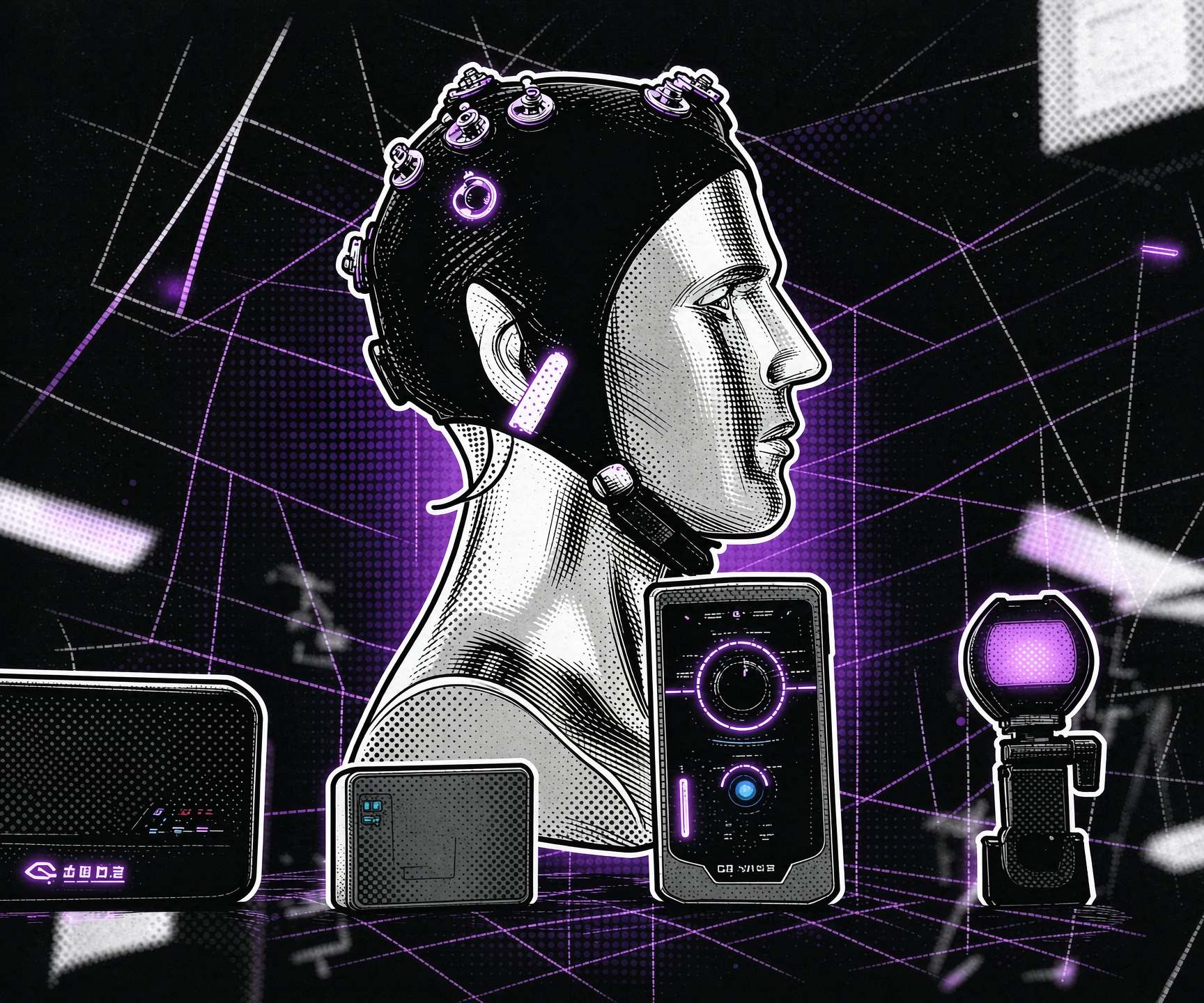
综述的出发点是一个很具体的临床痛点:早期诊断和及时干预对阿尔茨海默病至关重要,但常规评估方法无法捕捉纵向神经动态变化。传统生物标志物框架能提供病理学信息,但受限于高成本和有限的可及性。PET扫描和脑脊液检测能给出明确的病理信号,但价格高、有创、不能频繁重复。认知量表能重复做,但敏感度不够,往往等到明显下降时才显示出变化。这两类工具之间存在一个空档,就是AD早期那些微妙的、随时间波动的神经动态变化,目前没有一个便宜、可重复、敏感的方法来持续追踪。
The review's starting point is a very concrete clinical pain point: early diagnosis and timely intervention are critical for Alzheimer's disease, but routine assessment methods cannot capture longitudinal neural dynamic changes. Traditional biomarker frameworks can provide pathological information but are limited by high cost and limited accessibility. PET scans and cerebrospinal fluid tests can give clear pathological signals, but they are expensive, invasive, and cannot be repeated frequently. Cognitive scales can be repeated, but sensitivity is insufficient—changes often only show up when decline is already obvious. Between these two types of tools lies a gap: the subtle, time-varying neural dynamic changes in early AD currently have no cheap, repeatable, sensitive method for continuous tracking.
综述提出的概念框架,核心思路是把神经解码和状态依赖的神经活动调节整合在一起。神经解码做的是从脑电信号里读出疾病状态,状态依赖的神经活动调节做的是根据读出的状态去干预。这两件事分开做,各自都有研究基础。把它们放进一个闭环里,就变成了:读取状态,判断当前处于AD连续谱的哪个位置,施加相应的神经调控,再读取调控后的状态,持续调整。这个闭环的逻辑,和脑机接口在运动康复领域的应用有相似之处,但AD面对的问题更复杂,因为目标状态本身是模糊的、渐进变化的。
The conceptual framework proposed in the review centers on integrating neural decoding and state-dependent neural activity modulation. Neural decoding reads disease states from EEG signals; state-dependent neural activity modulation intervenes based on the read state. Done separately, both have research foundations. Put into a closed loop, it becomes: read state, determine where on the AD continuum the patient currently is, apply corresponding neuromodulation, read the post-modulation state, and continuously adjust. This closed-loop logic resembles BCI applications in motor rehabilitation, but AD faces a more complex problem because the target state itself is fuzzy and progressively changing.
综述里有一个值得注意的表述上的克制。它考察了基于神经反馈和神经调控的治疗性BCI策略,同时清晰地区分了在AD中已证实的证据与其他神经系统疾病中得出的概念验证发现。这句话翻译一下:有些BCI治疗方法在帕金森病、抑郁症、癫痫里显示出了效果,但这些效果不能直接搬到AD上,因为AD的病理机制和这些疾病不同。综述把这个区分明确写出来,说明作者对当前证据的强度有清醒判断,没有把其他疾病里的成功案例直接算作AD的成果。
There is a notable restraint in the review's language. It examines therapeutic BCI strategies based on neurofeedback and neuromodulation, while clearly distinguishing evidence confirmed in AD from proof-of-concept findings derived from other neurological diseases. Translated: some BCI treatments have shown effects in Parkinson's disease, depression, and epilepsy, but these effects cannot be directly transplanted to AD because AD's pathological mechanisms differ from these diseases. The review explicitly writes out this distinction, indicating the authors have a clear judgment of current evidence strength—they do not count successes in other diseases directly as AD achievements.
AI在这套框架里承担的角色,综述分了三块:神经解码、自适应控制、个性化干预。神经解码是用模型从多模态神经数据里提取疾病相关特征,比传统信号处理方法更擅长处理高维、非线性的脑电数据。自适应控制是让BCI系统根据实时反馈调整刺激参数,而不是按照预设的固定方案运行。个性化干预是基于个体的神经特征和疾病阶段,定制治疗方案。这三块里,神经解码的进展最实在,因为EEG信号的解码本身就是一个成熟的机器学习应用场景。自适应控制和个性化干预的挑战更大,因为闭环系统里的反馈延迟、刺激参数空间、个体差异,都还没有形成标准化的解决方案。
AI's role in this framework is divided into three parts: neural decoding, adaptive control, and personalized intervention. Neural decoding uses models to extract disease-related features from multimodal neural data, better at handling high-dimensional, nonlinear EEG data than traditional signal processing methods. Adaptive control lets the BCI system adjust stimulation parameters based on real-time feedback, rather than running a preset fixed protocol. Personalized intervention tailors treatment based on individual neural features and disease stage. Among these three, neural decoding has the most solid progress, because EEG signal decoding is itself a mature machine learning application. Adaptive control and personalized intervention face bigger challenges, because feedback latency, stimulation parameter spaces, and individual differences in closed-loop systems have not yet formed standardized solutions.
综述最后批判性评估了主要的方法学和转化挑战,列了四条:数据稀缺、疾病异质性、模型可解释性有限、闭环实施问题。这四条不是套话。数据稀缺在AD领域尤其严重,因为能同时提供多模态神经数据和明确病理诊断的队列很少。疾病异质性意味着同样是AD诊断,不同患者的神经动态特征可能差异很大,一个模型很难覆盖所有亚型。模型可解释性有限是医疗AI的通病,但在AD这种需要长期干预的场景里,医生需要理解模型为什么给出某个判断,才能决定是否信任它。闭环实施问题更具体,把BCI设备长期戴在AD患者头上,本身就面临依从性和工程可靠性的双重考验。
The review critically assesses major methodological and translational challenges, listing four: data scarcity, disease heterogeneity, limited model interpretability, and closed-loop implementation issues. These four are not boilerplate. Data scarcity is especially severe in AD because cohorts that simultaneously provide multimodal neural data and definitive pathological diagnosis are rare. Disease heterogeneity means that within the same AD diagnosis, different patients' neural dynamic features can vary widely, and one model struggles to cover all subtypes. Limited model interpretability is a common ailment of medical AI, but in a scenario like AD requiring long-term intervention, doctors need to understand why a model gives a certain judgment before deciding whether to trust it. Closed-loop implementation issues are more concrete—keeping a BCI device on an AD patient's head long-term faces dual tests of compliance and engineering reliability.
综述给出的未来优先方向包括:标准化的多模态AD队列、基于生物学原理的可解释人工智能(XAI)、符合监管要求的系统集成、严格的前瞻性临床验证。这四条按顺序读,其实是一条从数据到模型到产品到验证的路径。标准化队列解决数据稀缺和异质性问题,XAI解决可解释性问题,监管合规解决系统集成问题,前瞻性临床验证解决闭环实施后的效果确认问题。这条路径的每一步都不新鲜,但把它们串起来作为AD领域AI增强BCI的优先方向,说明这个领域目前还处在概念框架阶段,离临床落地还有相当的距离。
The priority directions for future clinical translation outlined in the review include: standardized multimodal AD cohorts, biologically grounded explainable AI (XAI), regulatory-compliant system integration, and rigorous prospective clinical validation. Read in order, these four form a path from data to model to product to validation. Standardized cohorts address data scarcity and heterogeneity, XAI addresses interpretability, regulatory compliance addresses system integration, and prospective clinical validation addresses effect confirmation after closed-loop implementation. None of these steps is new, but stringing them together as priority directions for AI-enhanced BCI in AD indicates the field is still at the conceptual framework stage, with considerable distance to clinical deployment.


